The AI Gold Rush: Valuations, Tokens, and the Unstoppable Hype Machine
This week, Anthropic’s $965B valuation overshadowed even OpenAI’s $80B behemoth, proving that AI isn’t just a product—it’s a speculative asset class. The company’s $65B raise, paired with a $1.8T forecast for the global AI infrastructure market by 2030, signals a tectonic shift: AI models are no longer just tools, they’re tradable commodities. Exchanges like CME and Binance are rolling out AI token futures, treating models like gold or oil. Meanwhile, spot AI workloads on AWS and OpenSearch are now the battleground, with AWS claiming its revamped OpenSearch Serverless cuts costs by 60% and handles 12M daily agent requests. This isn’t evolution—it’s a land grab. And the landlords? They’re charging egress fees, idle time penalties, and lock-in taxes that can triple the sticker price of an H100 cluster. NVIDIA’s proprietary stacks aren’t just ecosystems—they’re toll roads.
But let’s be real: the hype is running ahead of the fundamentals. We saw zero-shot SAR-optical matching hit 81% accuracy using CLIP and DINOv2, eliminating months of sensor-specific training and unlocking disaster response capabilities. Yet, we also saw PC Workman 1.7.6’s AI, trained by 28 strangers, churn out desktop-melting media queries because open-source AI still can’t do responsive design. The gap between ‘this works in theory’ and ‘this works in production’ is widening. AI may do for FOSS what 30 years of idealism couldn’t—but only if we stop pretending prompt engineering is a substitute for UX rigor.
And then there’s the tokenization of everything. AI models as commodities? That’s not progress—that’s financialization. It turns innovation into a derivatives play, where traders hedge against volatility in a market that doesn’t yet exist. Anthropic’s revenue hit a $47B annual run-rate in seven weeks, but is that growth or froth? When the music stops, who’s left holding the bag? Probably the same folks who bet big on crypto in 2021.
Realities Collide: Where AI Promises Meet Human Limits
Amid the valuation euphoria, a few brutal truths bubbled up. A developer tried to automate their Obsidian vault with Claude AI, cutting manual note-taking by 70%—only to realize the tool was doing the thinking for them. Another spent hours untangling an AI website builder’s responsive design failures, where grids collapsed on desktops despite looking sharp on phones. These aren’t edge cases—they’re symptoms of a larger delusion: that AI can automate creativity while preserving quality.
Worse still, AI’s hallucinations aren’t just bugs—they’re existential risks. A colleague’s skepticism about ‘AI lying’ isn’t paranoia; it’s a survival instinct. The solution? Grounding responses in verified data. RAG with Ollama’s local JSON files slashes hallucinations by 90% and cuts costs to near-zero. But why are we still debating this? Because vendors would rather sell you a hallucination than admit that their models are just fancy autocomplete.
And let’s talk about the hidden costs. Cloud GPU training isn’t $2–$3.50 per hour—it’s triple that when you factor in egress fees, idle time, and vendor lock-in. NVIDIA’s dominance isn’t just technical superiority; it’s a tax on progress. Companies like Amazon are pivoting to Blue Origin for heavy-lift launches because United Launch Alliance’s Vulcan rocket keeps failing. Infrastructure chaos isn’t slowing AI down—it’s reshaping it into a game of slots and seams.
The gap between hype and reality isn’t closing. It’s widening into a canyon. And the only ones crossing it are the ones willing to confront the messy, unglamorous truth: AI isn’t magic. It’s a tool. And tools, like all things, break.
Cloud Wars: AWS Reshapes OpenSearch, Elasticsearch Fights Back
AWS didn’t just update OpenSearch this week—it gutted its decade-old architecture and rebuilt it from scratch to chase agent workloads. The result? 80% lower ingestion latency, 3x faster Hugging Face embeddings throughput, and the ability to process 12M daily agent requests. This isn’t incremental improvement; it’s a coup. Dubbed ‘Project Aura,’ it leapfrogs rivals like Elasticsearch, which is now scrambling to defend its turf with new features and integrations.
The stakes? Real-time data handling for AI agents. OpenSearch Serverless now delivers instant autoscaling and 60% cost savings, redefining how developers build agentic apps. But here’s the catch: this architecture is optimized for AWS’s vision of agentic AI—not yours. Vendor lock-in isn’t just a risk; it’s baked into the design. And while AWS claims resilience validation is now 50% faster and 30% more accurate, the real question is: accurate for whom?
Meanwhile, cybersecurity teams are integrating generative AI to slash threat detection times by 40%, but the tools are only as good as the data feeding them. Most DNS audit tools flag SPF failures but leave you drowning in alerts without fixes. The real winners? The ones that don’t just shout ‘fail’—they deliver the exact DNS record to add. That’s the difference between a tool and a solution.
Cloud isn’t just shifting. It’s fracturing. And the cracks are where the next battles will be fought.
Cybercrime’s New Playground: World Cup Scams, Signal Phishing, and Bulletproof Hosts
The FBI exposed 150+ fake FIFA-linked domains exploiting the 2026 World Cup hype, fleecing fans out of $3,200 per scam on average. These aren’t just phishing attempts—they’re psychological warfare, leveraging urgency, excitement, and FOMO to harvest data and sell counterfeit tickets. Meanwhile, Signal users are being tricked into handing over 30-word recovery keys by hackers masquerading as support. Over 40 million users are at risk as phishing attacks surge alongside AI’s role in crafting lures.
Then there’s the Dutch raid on THE.Hosting—a half-measure that seized 800 servers and arrested two operators, but left key Russian bulletproof IPs untouched. This isn’t justice; it’s theater. Cybercrime infrastructure is resilient by design, and targeting peripheral assets while leaving the core intact is like arresting a drug mule while the cartel’s leadership skips town.
But here’s the twist: AI isn’t just enabling scams—it’s transforming them. Fake FIFA sites now use AI to generate realistic player bios and match previews, blurring the line between legitimate content and fraud. Signal’s recovery key phishing uses AI to mimic support responses with eerie accuracy. The line between automation and deception is dissolving.
And let’s not forget the insider threat: a Google engineer exploited internal search data to win $1.2M on Polymarket. That’s not hacking—it’s abusing privilege. When your most sensitive asset is your internal search index, every query is a potential bet.
Hardware: Old Dogs, New Tricks, and a Race to the Bottom
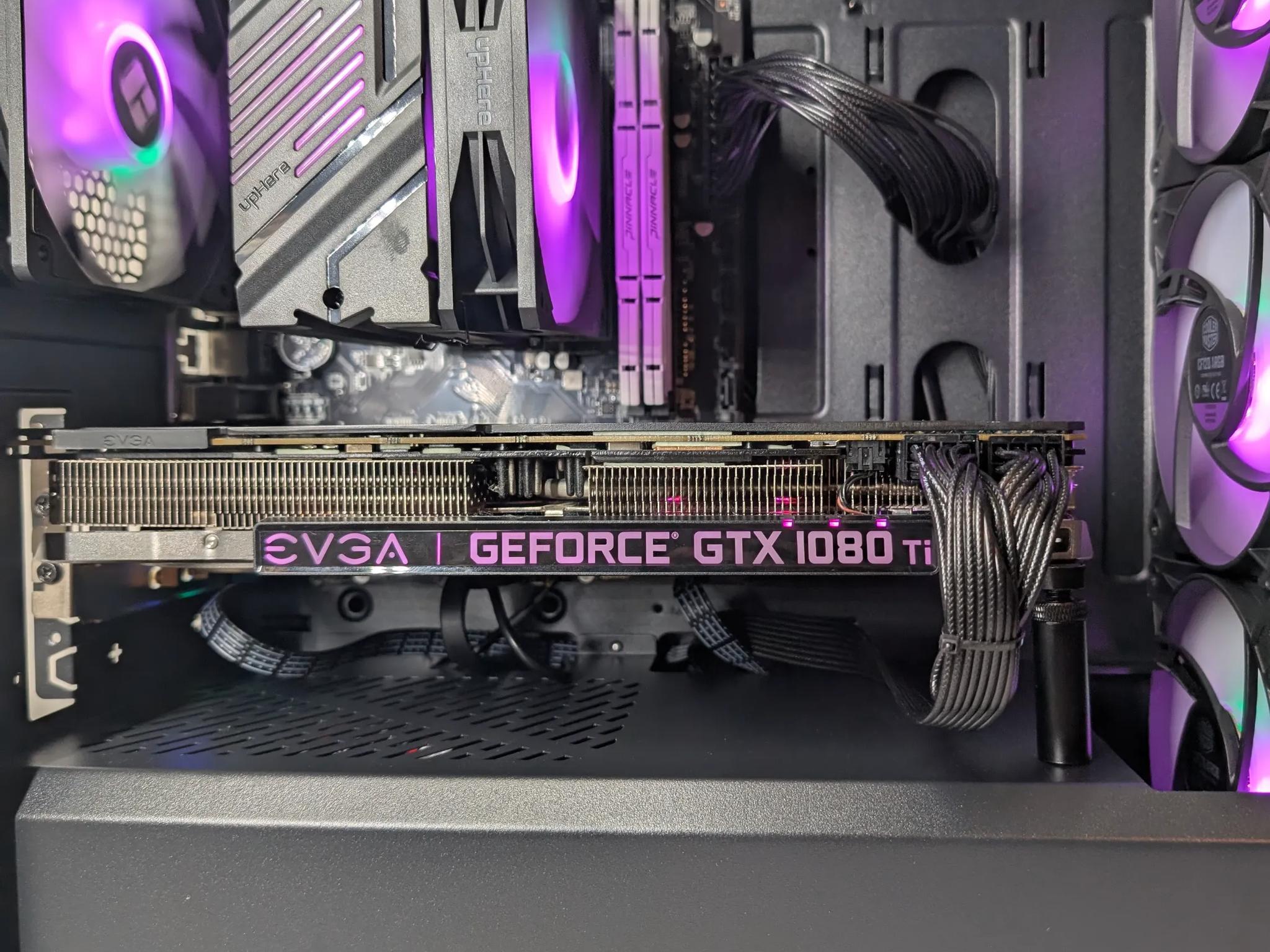
Nvidia’s GTX 1080 Ti and AMD’s RX Vega 64 are still handling 2026 AAA titles like *Starfield 2* at 60+ FPS on Medium—proving that hardware longevity isn’t dead, it’s just been optimized into irrelevance. Meanwhile, ASRock’s fanless iBox mini PCs are getting Intel Panther Lake upgrades, targeting industrial applications where silence and reliability matter more than raw power. But the real story? The $6B Chinese startup LinkerBot, building $600 robotic hands with human-like dexterity, aiming to dominate a $37B humanoid robotics market by 2030. That’s not incremental—it’s a bloodbath for incumbents.
On the flip side, Amazon’s pivot to Blue Origin for satellite launches highlights the fragility of even the most robust infrastructure. ULA’s Vulcan delays are forcing Amazon to reshuffle Project Kuiper’s timeline, delaying a 3,236-satellite constellation by months. And Slate’s $59,990 EV truck pre-orders—backed by Jeff Bezos—could disrupt the market by undercutting Rivian and Ford by $20K. But with a June 24 launch, the real test is execution. Hardware is back—and so is the race to the bottom.
Anthropic had a week that broke the internet. A $965B valuation. A $65B raise. A $47B annual run-rate. It didn’t just outpace OpenAI—it lapped it. Meanwhile, AWS’s OpenSearch Serverless overhaul proves cloud giants are still the ones dictating the tempo, and LinkerBot’s $600 robotic hands could redefine automation’s future. Oh, and Slate’s EV truck—backed by Bezos—could finally make EVs affordable. That’s a clean sweep.
The Dutch raid on THE.Hosting was a joke. Seizing 800 servers while leaving the core of cybercrime infrastructure intact? That’s not justice—it’s farce. Signal’s phishing problem is only getting worse, and the AI website builder that collapsed on desktops despite looking sharp on phones? That’s the sound of hype hitting a wall. And let’s not forget the developers still untangling AI’s UX failures—because open-source AI is great at promising, but awful at delivering.
Next week, expect AI token futures to explode in volume as traders bet on Anthropic and OpenAI’s IPOs. AWS will roll out ‘Project Aura’ region-by-region while Elasticsearch scrambles to defend its turf. Cybercriminals will launch AI-powered FIFA 2026 scams at scale, and Signal’s phishing attacks will hit 50M+ users. Meanwhile, Slate’s EV truck pre-orders will sell out within hours, and LinkerBot will secure its first major manufacturing deal. The tech world isn’t just moving fast—it’s already moved.
This week wasn’t just about progress. It was about the collision of hype and reality. AI is reshaping industries, but the cracks are showing. The cloud is fracturing, and cybercrime is weaponizing AI. The winners? The ones who confront the mess. The losers? The ones who still believe the hype. See you Monday—wherever that takes us.