How AI Drove SSDs From Commodity to Luxury
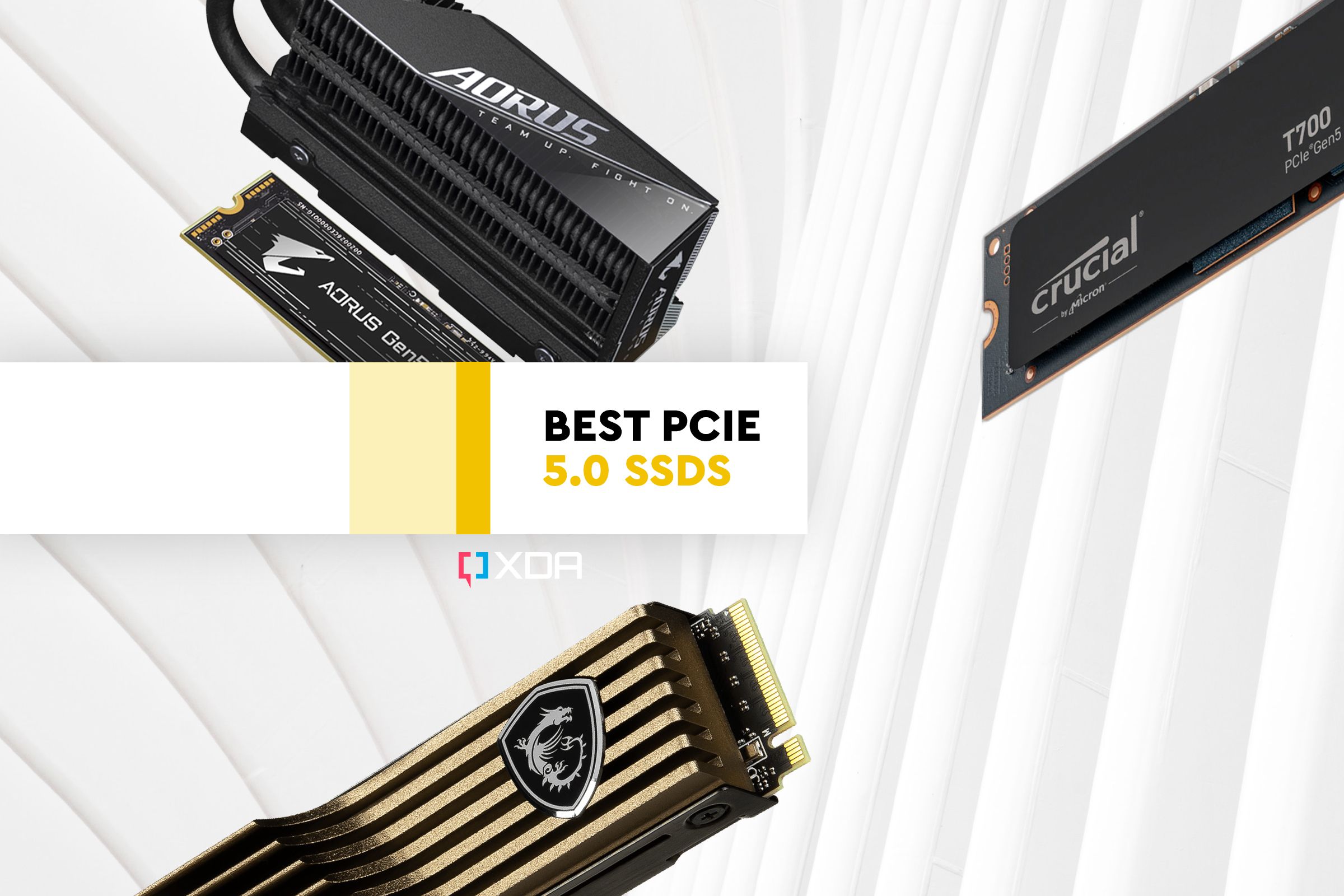
Let’s start with the numbers. In 2024, WD Black SN850X 2TB SSDs were retailing for $173. By 2026, they’re $649—a 275% increase. That’s not inflation; that’s a market in freefall. The driver? AI workloads.
AI models, especially large language models (LLMs), are memory hogs. Training a single 175B parameter model like LLaMA requires up to 1.5TB of high-speed HBM (High Bandwidth Memory) just for the weights. Serving these models at scale demands even more: each inference request can require multi-GB of KV cache, and modern data centers may host dozens of concurrent sessions. Enterprises like Meta and NVIDIA are snapping up HBM and DDR5 like it’s going out of style, leaving consumer and prosumer markets to fight over scraps.
The impact is cascading. Desktop SSDs, once a $100 afterthought, now rival GPU prices. The Samsung 990 Pro 2TB, once $150, is now $450. Even budget drives like the Crucial MX500 have seen 80% price hikes. The result? Gamers forced to choose between 4K textures or storage. Creators abandoning NVMe arrays for HDDs. And small businesses? They’re stuck waiting—or worse, using cloud storage with egress fees that dwarf the hardware cost.
This isn’t speculative. It’s already here. The 2026 Consumer Electronics Show was a wake-up call: panels on ‘affordable AI’ were overshadowed by whispers about ‘the memory ceiling.’ Even AMD’s CEO Lisa Su acknowledged in a Q4 2025 earnings call that DRAM and NAND shortages were ‘structural, not cyclical.’
The Hidden Victims: From Gamers to Journalists
The AI RAM shortage isn’t just inflating hardware prices—it’s reshaping who gets access to computation.
Take gamers. A 2025 Steam Hardware Survey found that 43% of respondents delayed upgrading their storage due to price, and 18% had resorted to external HDDs—despite NVMe SSDs being 3x faster. The knock-on effect? Load times in modern titles like *Alan Wake 2* or *Starfield* now regularly exceed 2 minutes on HDDs, a barrier for competitive play.
But it’s not just leisure that’s suffering. Journalists, indie devs, and researchers—especially those in the Global South—are being priced out. A 2026 report from Access Now found that in Nigeria, the cost of a 1TB NVMe SSD now represents 14% of median monthly income, up from 4% in 2023. Teams building AI tools locally are forced to use cloud GPUs with egress fees that can exceed $1,000/month for 500GB transfers.
Even the supposed winners of the AI era are feeling the squeeze. Apple’s M-series chips come with unified memory, but the base 24GB config is now standard—up from 16GB in 2024. For users upgrading from older Intel Macs, that’s a $1,000 jump just to keep parity. Meanwhile, iPad Pro users face a cruel irony: the most powerful iPad ever ships with 16GB RAM, but external SSD support is crippled by iPadOS restrictions.
The message is clear: if you’re not training or serving AI models, you’re now a second-class citizen in the tech economy.
The Supply Chain Chokepoints: HBM, DDR5, and the China Factor
The bottleneck isn’t just demand—it’s supply, and it’s concentrated in three places: HBM production, DDR5 fab capacity, and geopolitics.
HBM is the crown jewel. Samsung and SK Hynix dominate 90% of the market, with TSMC as the sole advanced packaging partner. Each HBM stack requires ~40,000 TSVs (Through-Silicon Vias), and yields are punishing. TSMC’s 2025 HBM3E ramp saw defect rates spike to 12% in Q1, delaying shipments to NVIDIA by 6 weeks.
DDR5 is the workhorse. Micron, Samsung, and SK Hynix control 95% of DDR5 fab capacity, and their 2026 lines are maxed out. Worse, DDR5 uses ~30% more power than DDR4, and data centers are struggling with thermal throttling in server racks.
Then there’s China. In 2025, the U.S. expanded semiconductor export controls to include DRAM tools, forcing Micron to idle its Xi’an fab for 9 weeks. Chinese OEMs, desperate for memory, are now paying a 40% premium for grey-market DDR4 chips repackaged as DDR5.
The result? A feedback loop: AI demand → supply chain strain → price spikes → delayed adoption → more AI demand. It’s a perfect storm of scarcity economics, and it’s showing no signs of abating.
What’s Next: The Scarcity Playbook and Your Survival Strategy
This isn’t a temporary blip. The International Technology Roadmap for Devices and Systems (ITRS) now includes a ‘Scarcity Index’—a metric tracking memory availability vs. AI demand. Their 2026 forecast? A 30% shortfall in HBM and DDR5 through 2028.
Here’s the playbook insiders are using to navigate the crunch:
**For consumers:**
- **Embrace tiered storage.** Use a small NVMe SSD (1TB) for OS and apps, and offload data to HDDs or cloud. Tools like *Btrfs* with compression can cut storage needs by 30%.
- **Adopt CXL.** PCIe 6.0 and CXL 3.0 let you pool memory across devices, effectively letting a 16GB laptop behave like it has 32GB.
- **Wait for DDR5-6400.** The next gen DDR5 standard drops idle power by 15%, easing data center constraints and trickling down to consumer boards.
**For developers:**
- **Optimize aggressively.** Quantize models to INT8 or FP16. Use KV cache quantization (e.g., vLLM’s PagedAttention). Even a 30% memory cut can mean the difference between a 16GB and a 24GB requirement.
- **Leverage cloud efficiently.** Use spot instances with burstable memory (e.g., AWS’s *g5g.xlarge* with 24GB). Avoid reserved instances unless you’re running 24/7.
- **Advocate for open memory standards.** Groups like CXL Consortium are pushing for disaggregated memory, but adoption hinges on enterprise pressure.
**For enterprises:**
- **Pre-buy HBM.** Samsung’s HBM3E is $8,000 per stack today. Lock in contracts now; prices may rise 50% in 18 months.
- **Invest in CXL switches.** Companies like Samsung and Rambus are shipping CXL 3.0 switches that let you pool memory across servers, cutting HBM needs by up to 40%.
- **Pressure regulators.** The U.S. CHIPS Act and EU Chips Act are funding fab expansion, but they’re not enough. Demand ‘memory quotas’ for AI workloads to reserve capacity for critical sectors.
The bottom line? Scarcity is the new normal. The tech that fueled AI’s rise is now being hoarded by it. The only winning move isn’t to wait for prices to drop—it’s to redesign your systems, your budgets, and your expectations around memory.
By 2027, the ‘AI RAM divide’ will be a defining tech inequality. Consumers in affluent markets will see SSD prices stabilize at 2-3x their 2023 levels, while those in emerging markets will rely on refurbished DDR4 systems with external SSD arrays. HBM will remain a luxury, with only hyperscalers and defense contractors able to afford it at scale. The first ‘memory-as-a-service’ (MaaS) offerings will emerge—cloud providers will rent out HBM in 100GB chunks at $1/GB/hour, mirroring the GPU-as-a-service model. Meanwhile, CXL 4.0 will enable ‘memory pooling’ across data centers, letting AI workloads share resources dynamically. The winners? Teams that treat memory as a first-class design constraint, not an afterthought. The losers? Everyone else.
The AI revolution wasn’t built on algorithms alone—it was built on silicon. And now that silicon is in short supply. The market’s message is loud and clear: memory isn’t just a component anymore. It’s the new oil. And if you’re not pumping it, you’re running on fumes.